

Kansas City Motorcycle Accident Lawyer
Experienced Motorcycle Attorneys Serving Clients in Kansas City, MO
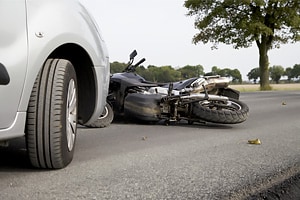
Experiencing a motorcycle accident can be profoundly devastating. The impact on your and your family’s lives can be significant, transforming your future in unimaginable ways. If you’ve been injured in a motorcycle accident due to someone else’s negligence or unsafe road conditions, you might be eligible for compensation. Our Kansas City Motorcycle Accident Lawyer is dedicated to supporting you throughout the legal journey.
Globally, motorcycles are frequently involved in vehicular accidents, with Kansas City being no different. Research indicates that motorcyclists face a 27-fold increase in the risk of fatal accidents compared to car passengers, largely because motorcycles provide minimal protection. Despite taking all safety precautions, motorcycle riders are at a substantial risk of sustaining severe injuries, including head injuries, in crashes.
One significant risk factor for motorcyclists is the oversight of other drivers. Cars and trucks often fail to notice motorcycles, leading to collisions. This issue is exacerbated by drivers’ failure to anticipate or notice motorcycles while making turns or lane changes. It’s crucial to remember that motorcyclists have the same rights to road safety as all other motorists.
Determining who is responsible for a motorcycle accident can be complex, involving multiple parties or contributing factors. Typically, accidents stem from other drivers’ negligence.
Credible Sources of Motorcycle Accident in Missouri
Motorcycle accidents tend to result in more serious injuries due to the lack of protective barriers and safety features such as airbags and seatbelts. In Missouri, motorcycle accidents are less common than car accidents but are significantly more likely to result in severe injuries or fatalities. In 2011, motorcycle crashes had an 80% chance of causing serious injuries or death, compared to 36% for all vehicle accidents. A Kansas City Motorcycle Accident Lawyer can help assist you when you’ve been involved in an accident.
According to the NHTSA’s 2023 report, motorcyclists are 22 times more likely to die in crashes than car occupants, underscoring the need for skilled legal representation in Kansas City, where over 200 motorcycle crashes occur annually (Missouri DOT, 2024).
Missouri’s statute of limitations for personal injury claims is five years (RSMo § 516.120), but acting quickly preserves evidence. Our team ensures timely filings to strengthen your case.
Factors contributing to the severity of motorcycle accident injuries include:
- The absence of protective structures around the rider.
- The lack of safety features like airbags and seat belts.
- The higher likelihood of direct ground contact during accidents.
These factors increase the risk of serious injuries, including brain and neurological damage, skin injuries, broken bones, and joint dislocations.

Rik N. Siro
Rik N. Siro, a trial lawyer with nearly 40 years of experience, specializes in personal injury, wrongful death, and employment law, including discrimination, harassment, and wrongful termination. A senior partner at Siro Smith Dickson, P.C., he’s a Missouri/Kansas “Super Lawyer” and mediator, licensed in Missouri, California, and multiple federal courts.

Eric Smith
Eric W. Smith, a partner at Siro Smith Dickson, P.C., has over 25 years of experience in employment law, handling discrimination, harassment, and wrongful termination cases. A Kansas/Missouri “Super Lawyer,” he’s licensed in MO, KS, and DC courts, focusing on client justice. He’s also been repeatedly named to The Best Lawyers in America® for Litigation.

Athena Dickson
Athena M. Dickson, a partner at Siro Smith Dickson, P.C., with over 15 years of experience, specializes in employment law and personal injury. A Missouri/Kansas “Super Lawyer,” she’s licensed in MO, KS, and federal courts, dedicated to client justice. She also serves as a mediator in employment disputes.

Ryan McEnaney
Ryan P. McEnaney, an attorney at Siro Smith Dickson, P.C., joined in 2017, focusing on employment litigation and personal injury. A Missouri/Kansas “Super Lawyer Rising Star,” he’s licensed in MO, KS, and federal courts, dedicated to client justice. He handles discrimination, whistleblowing, and product liability cases.

Amy Jackson
Amy Jackson, an associate at Siro Smith Dickson, P.C., joined in 2021, specializing in employment and personal injury law. A Missouri/Kansas “Super Lawyer Rising Star,” she’s licensed in MO, KS, and federal courts, committed to client justice. She handles discrimination, harassment, and injury cases.
To hold another driver accountable for a motorcycle accident, four elements must be established:
-
Duty: The Obligation to Avoid Causing Harm to Others
Every driver on the road has a fundamental obligation to act in a manner that avoids causing harm to others. This includes following traffic laws, driving at safe speeds, and paying attention to the road and its users. The concept of duty in legal terms refers to this responsibility that one must exercise to ensure the safety and well-being of others, especially when operating a vehicle. This duty extends not just to other drivers but to pedestrians, cyclists, and motorcyclists as well, highlighting the importance of vigilance and care in every action taken on the road.
-
Breach of Duty: Failing to Meet the Expected Level of Care
A breach of duty occurs when an individual fails to meet the legally established standards of care, acting negligently or recklessly. For example, a driver who is texting while driving is not maintaining the level of attention required by law, thereby breaching their duty to other road users. This breach is not limited to acts of commission (doing something one should not do) but also includes acts of omission (failing to do something one should do), such as not signaling before turning.
-
Causation: The Breach of Duty Directly Caused Your Injuries
Causation links the breach of duty to the injuries sustained. It’s not enough to show that someone breached their duty; it must be proven that this specific breach directly led to the injuries in question. This means showing a clear and unbroken chain of events from the defendant’s action or inaction to the harm suffered by the plaintiff. Causation can often be the most complex element to prove, as it requires a clear demonstration that, but for the defendant’s breach of duty, the injuries would not have occurred.
-
Damages: You Suffered Physical and/or Emotional Injuries Due to the Breach
Damages refer to the actual harm suffered as a result of the breach of duty. This includes not only physical injuries but also emotional and psychological harm, such as pain and suffering, loss of enjoyment of life, and mental anguish. Damages are quantified not just in terms of immediate medical expenses but also take into account long-term implications of the injuries, including ongoing medical treatment, physical therapy, lost wages, and decreased earning potential. The purpose of compensatory damages is to “make the plaintiff whole,” to the extent possible, covering both economic and non-economic losses incurred due to the accident.
Standing Out As a Trustworthy Law Firm
 Motorcycle Cases Require Motorcycle-Specific Investigation
Motorcycle injury claims aren’t “car accident cases with a different vehicle.” The evidence is different, the injuries are often more complex, and insurance companies frequently lean into unfair assumptions about riders. That’s why our trial-focused approach includes early, motorcycle-specific investigation designed to preserve proof and prevent blame-shifting.
- Scene evidence that disappears fast: skid marks, debris patterns, gouge marks, road defects, and temporary signage.
- Motorcycle inspection: damage mapping, tire condition, lighting/visibility issues, helmet condition, and after-impact mechanical findings.
- Driver “looked-but-didn’t-see” analysis: lane-change and left-turn collisions often come down to visibility, timing, and distraction.
- Medical story + mechanics match: connecting how the impact occurred to why specific injuries happened (not just listing diagnoses).
 Missouri Helmet Rules Can Affect the Arguments Insurers Make
Missouri’s helmet requirements are often misunderstood, and adjusters may try to use helmet discussions to reduce responsibility—especially in serious head or brain injury cases. Under Missouri law, qualified motorcycle operators age 26 or older may ride without protective headgear only if specific insurance-related requirements are met.
Even when helmet use becomes a talking point, the key legal question in most claims remains the same: what caused the crash and what injuries resulted. A well-prepared case focuses on liability evidence, medical proof, and credible damages documentation—not speculation or stereotypes.
 Kansas City Crash Risk and “High Injury” Corridors
Kansas City has a public Vision Zero initiative aimed at reducing traffic deaths and serious injuries, and the City’s “High Injury Network” identifies where fatal, serious-injury, and minor-injury crashes occur most often (using 2019–2023 data).
Why this matters for motorcycle claims: when a crash happens on a known high-risk segment, your case may require stronger documentation of roadway context—visibility, intersection design, surface condition, signage, and traffic patterns—especially if unsafe conditions played a role.
 Kansas City Motorcycle Crashes Are Often Two-State Claims
In the Kansas City metro, the state line matters. A crash may happen in Missouri while a rider lives in Kansas (or the other way around), and that can affect where a claim is handled, how insurance coverages apply, and what steps come next.
- Where the crash happened: the location can affect procedure, documentation, and how liability evidence is developed.
- Insurance coverage questions: which policy applies first, and whether additional coverages may be available.
- Medical treatment and records: multi-provider treatment across both states can create documentation gaps if not organized correctly.
Our job as a Kansas City Motorcycle Accident Lawyer is to simplify the process for you—gathering records, building the proof, and keeping the claim moving while you focus on recovery.
 What to Do After a Motorcycle Crash in Kansas City
Early decisions can shape the strength of your case. If you are able, these steps help protect both your health and your claim:
- Get medical care right away and follow up consistently—gaps in treatment are commonly used to dispute injury severity.
- Photograph the scene (vehicles, road surface, signage, visibility, injuries, and gear) before conditions change.
- Keep your gear (helmet, jacket, gloves, boots) in the same condition—don’t repair or discard it.
- Avoid recorded statements to insurers until you understand the issues in dispute.
- Document symptoms daily (sleep, pain, limitations, missed work, and activities you can’t do).
If you want a quick next step, the firm offers free consultations and provides office location and hours on the page.
Hire a Qualified Kansas City Motorcycle Accident Lawyer
If you’re dealing with injuries from a motorcycle accident in Kansas City, consulting with a knowledgeable motorcycle accident attorney is crucial. At Siro Smith Dickson, we understand the frequency and severity of motorcycle accidents. Prompt legal consultation can significantly enhance your chances of obtaining the compensation you deserve. Our Kansas City personal injury lawyers are here to support you. Reach out through our website or call us at (816) 471-4881 for assistance.
Visit us at 1621 Baltimore Ave, Kansas City, MO 64108, or call (816) 471-4881 for a free consultation, available Monday–Friday, 8 AM–5 PM. We offer virtual consultations for your convenience.
